
CyberUP Institute continuously analyzes real-world cyber incidents, offensive simulations, and attack dynamics affecting organizations across industries and sizes. One key insight consistently emerges: hackers are not looking for what companies believe is most valuable, but for what is easiest to exploit in real operational conditions.
Understanding the attacker’s mindset does not mean glorifying hacking. It means anticipating adversarial decision-making. This perspective is essential to building effective security that is grounded in reality rather than compliance alone.
Context and urgency: why understanding the attacker matters today
The traditional corporate perimeter has dissolved. Cloud services, hybrid work, third parties, federated identities, and remote access have multiplied entry points. In this environment, attackers no longer seek spectacular breaches; they follow the path of least resistance.
CyberUP Institute observes that many severe incidents start with trivial compromises that are often ignored because they appear “non-critical.” The urgency today is not only strengthening defenses, but aligning risk perception with the attacker’s point of view.
The strategic value of an offensive mindset
Thinking like an attacker does not require illegal tools. It requires understanding priorities, objectives, and constraints. Attackers optimize for efficiency, not perfection. They do not need full control, only enough control.
This approach aligns with European threat intelligence findings showing that most attacks follow repeatable, opportunistic patterns, as highlighted in reports published by ENISA.
Understanding what attackers truly seek allows organizations to focus resources where they actually reduce risk.
What hackers look for when assessing a company
Contrary to common belief, attackers do not begin with “crown jewels.” They start with what is exposed, neglected, or underestimated. Their initial questions are not “Which data is most valuable?” but “Where can I enter with minimal friction?” and “How long can I remain unseen?”
At this stage, the organization is observed as an ecosystem of people, processes, technologies, and third-party relationships. Every inconsistency becomes potential leverage.
Primary target: identities and access
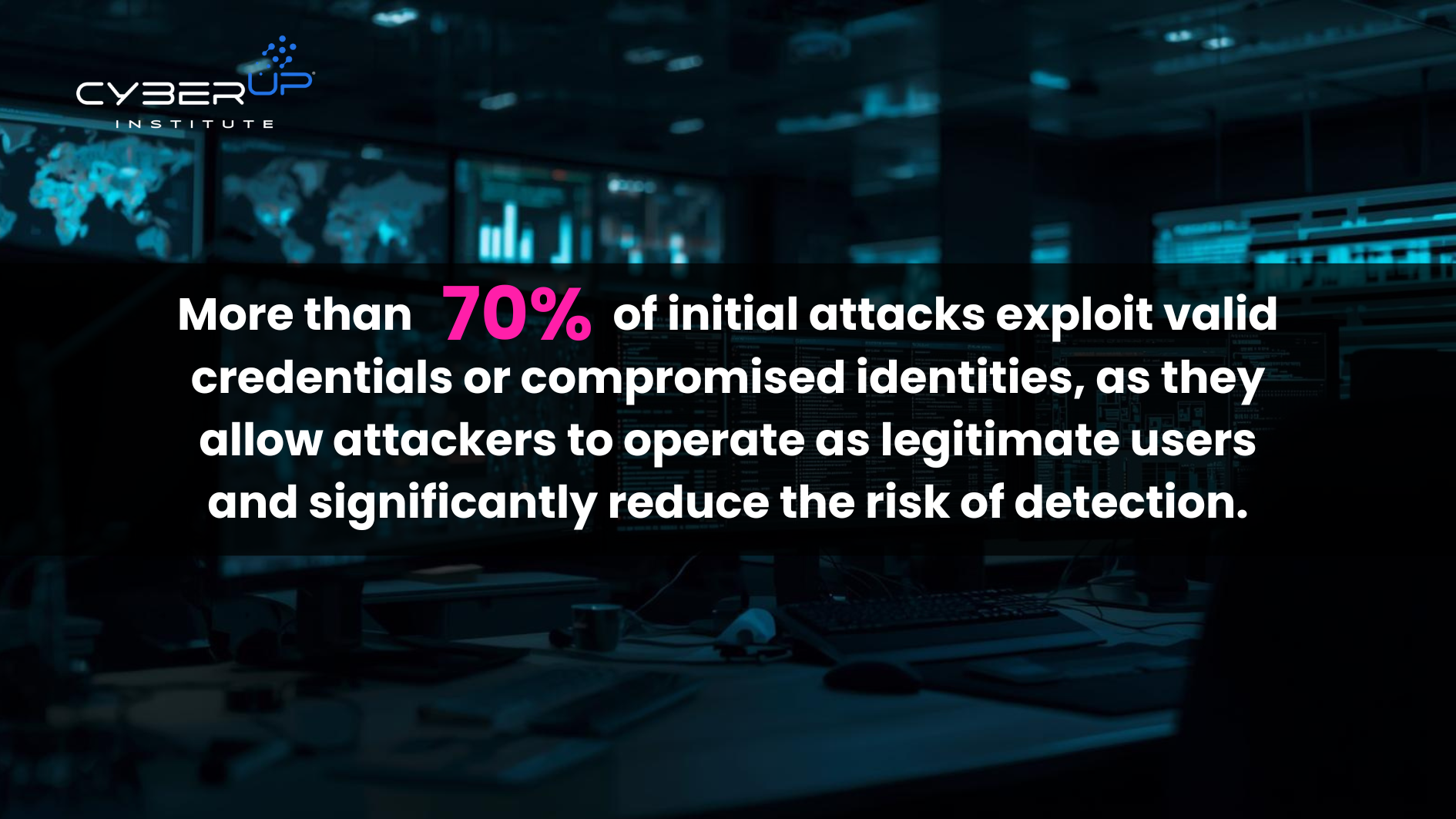
Today, identity is the real perimeter, and attackers know it. Weak, reused, or poorly managed credentials enable silent access. Valid credentials are often more valuable than zero-day exploits.
Many advanced attacks begin with phishing, legacy credential abuse, or compromised supplier accounts. This is why identity management is central to modern security frameworks, as emphasized by NIST’s risk management guidance.
Secondary objective: moving without being detected
Gaining access is only the first step. The real value lies in remaining present. Once inside, attackers probe the environment: what is monitored, which logs are reviewed, and how quickly the organization responds.
In many organizations, monitoring exists but is not operationally enforced. Ignored alerts and poorly correlated logs create blind spots where attackers invest time, because time favors them.
Third objective: understanding how the organization works
Attackers do not operate solely across servers and endpoints. They study organizational processes and human behavior. Who approves payments? How decisions are made? Which teams communicate poorly?
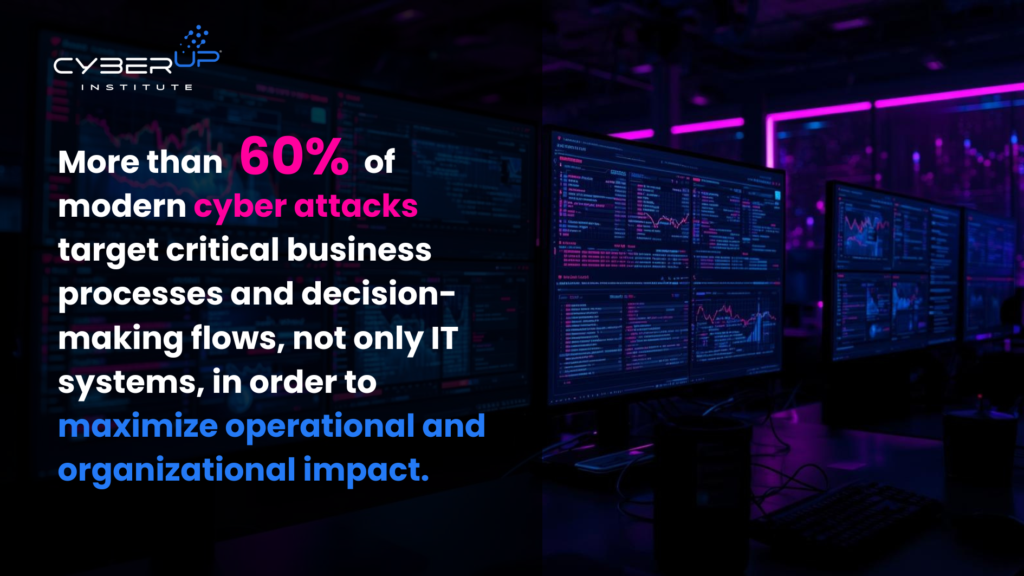
These insights enable targeted attacks such as Business Email Compromise, legitimate-looking privilege escalation, and manipulation of decision flows. The attack becomes both technical and organizational.
Fourth objective: maximizing impact with minimal effort
The end goal is not always data theft. Often it is disruption, extortion, or leverage. Ransomware, silent sabotage, selective exfiltration, and reputational threats are tools to pressure organizations.
Europol’s analyses show that criminal groups increasingly combine technical and psychological pressure to maximize returns while minimizing effort.
What organizations underestimate and attackers exploit
CyberUP Institute consistently observes a gap between what organizations consider critical and what attackers actually exploit. Investments often focus on advanced tools, while operational clarity, tested processes, and role definition are overlooked.
Untested Incident Response plans, reliance on key individuals, and lack of exercises create fragility precisely where attackers look. This is why response-oriented preparedness is essential to reducing attacker advantage.
From offensive insight to effective defense
Understanding the hacker mindset enables pragmatic defense. The goal is not to block everything, but to make attacks costly, noisy, and unpredictable. This is achieved by combining identity control, real monitoring, clear processes, and trained people.
Organizational awareness plays a key role. Well-designed Awareness programs reduce the effectiveness of social engineering, which remains one of the most successful attack vectors.
Recovery and post-incident analysis: the attacker’s final test
Attackers also observe what happens after an incident. How fast does the organization recover? Are weaknesses actually addressed? A rushed recovery without analysis signals future vulnerability.
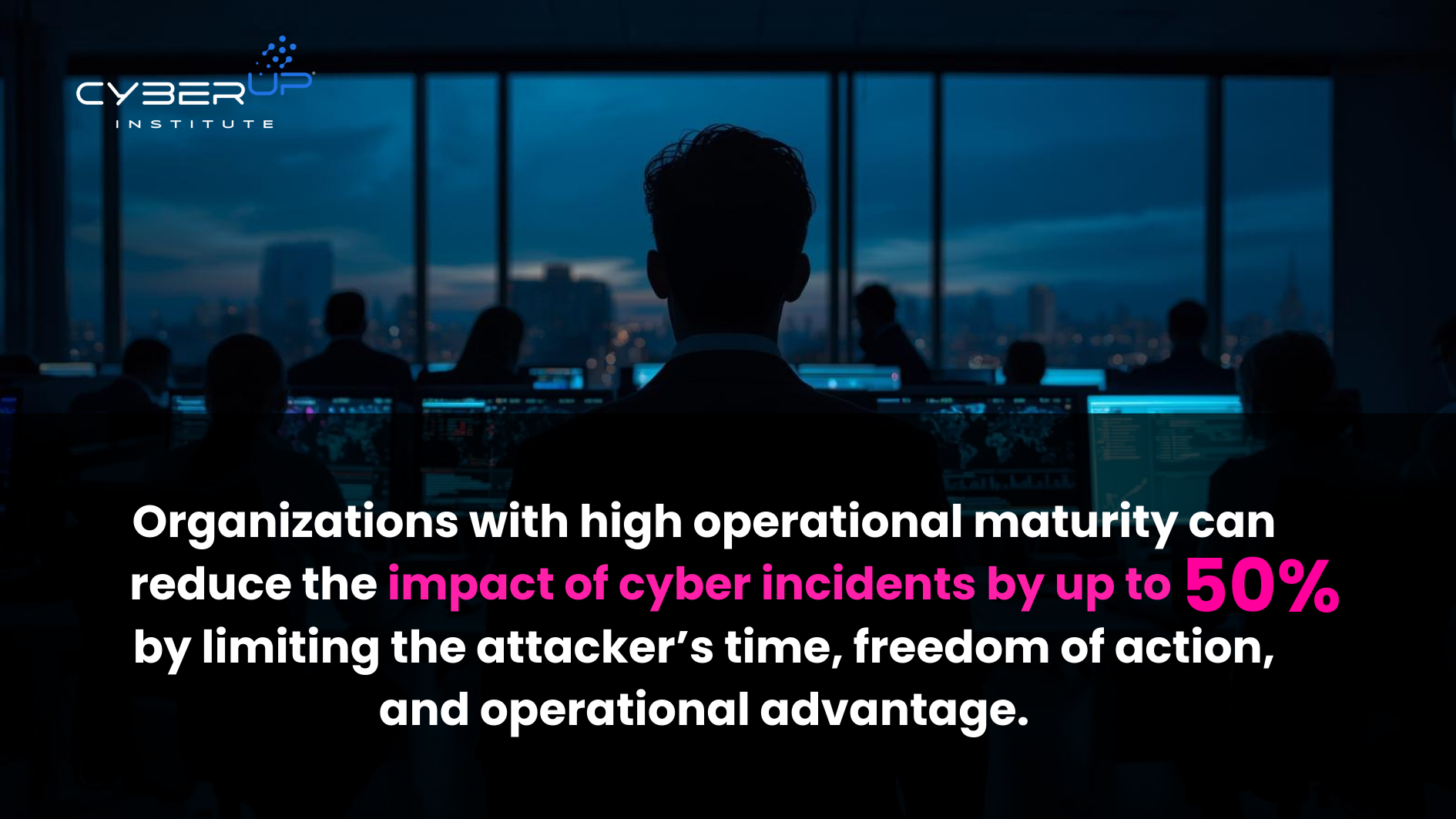
Crisis management and leadership involvement are therefore integral to security. Structured crisis-management approaches reduce impact and help restore trust.
Conclusion: thinking like a hacker to defend better
Inside the hacker’s mind there is method, not chaos. Attackers seek easy access, operational silence, unclear processes, and slow response. Organizations that rely only on checklists and disconnected tools remain predictable.
CyberUP Institute believes real security begins when organizations view themselves through an external lens, acknowledge weaknesses, and address them systematically. Understanding what hackers truly seek is not theoretical, it is the first step to removing their greatest advantage: surprise.
Frequently Asked Questions (FAQ)
Why is it important to understand how hackers think, not just how they attack?
Because attacks are not random; they are driven by rational decisions based on opportunity and context. Understanding the attacker’s mindset allows organizations to anticipate actions. Defense becomes proactive rather than reactive. This leads to more effective risk reduction.
Do hackers only look for sensitive data?
No. Data theft is just one option. Often attackers seek persistence, operational leverage, or the ability to disrupt and extort. Impact matters more than possession. The goal is pressure and control, not just information.
Why have identities become the primary target?
Valid identities allow attackers to blend in as legitimate users. This lowers detection rates and extends dwell time. Many security controls rely on detecting abnormal behavior. Stolen credentials neutralize that advantage.
Which organizational weaknesses are most commonly exploited?
Unclear roles, untested response plans, and dependence on key individuals. Fragmented communication and slow decision-making are also frequent targets. These weaknesses signal low readiness. The failure is often organizational rather than technical.
How can organizations practically reduce attacker advantage?
By making attacks more expensive, noisy, and unpredictable. Strong identity management, real monitoring, and trained people are essential. Regular simulations improve response under pressure. Resilience is built through practice, not policy alone.