
CyberUP Institute works daily with technical teams, SOCs, management, and non-IT functions that approach cybersecurity from a common starting point: the perception of being potential victims of uncontrollable events. Complex attacks, ransomware, and sudden crises are often experienced as something that “happens,” triggering reaction rather than control.
The experience inside CyberArena fundamentally changes this perspective. Not because it removes risk, but because it transforms how people and organizations read, interpret, and manage an incident. Teams move from passive victims to aware actors, capable of recognizing signals, making decisions, and acting under pressure.
Context and urgency: why theory is no longer enough
In recent years, cybersecurity has become richer in frameworks, policies, and advanced tools. However, CyberUP Institute observes that many incidents still generate chaos not due to a lack of technology, but due to the absence of real operational capability.
During an attack, what matters is not knowing what should be done in theory, but being able to do it at the right moment, with incomplete information and under stress. This is where the gap between theory and practice becomes evident. CyberArena was designed precisely to close this gap by exposing teams to realistic scenarios that replicate the pressure of a real incident.
The strategic value of experiential training
Traditional training transfers knowledge. Experiential training builds capability. Entering CyberArena means living through an attack in a controlled yet realistic environment, where every decision has visible consequences.
This approach aligns with European guidance on operational preparedness, which highlights how practical exercises improve response capability and reduce incident impact, as reported by ENISA.
The strategic value is not only technical, but organizational: teams learn how to work together when it truly matters.
Where teams start: the “victim” mindset
When entering CyberArena, many teams display recurring patterns. They wait for confirmation, underestimate weak signals, over-delegate decisions, and struggle to distinguish what is critical from what is noise.
This mindset is not an individual limitation, but the result of environments where incidents are rare and always handled as emergencies. Without training, even technically skilled teams react in fragmented ways.
What changes when the attack becomes real (even if simulated)
When the scenario unfolds inside CyberArena, time becomes a concrete variable. Alerts accumulate, systems degrade, management requests updates, and communication must be handled in parallel.
It is in this context that teams learn a fundamental lesson: there is no perfect response, only a response that is good enough at the right time. The focus shifts from finding the ideal solution to managing priorities.
First lesson: recognizing signals and deciding early
One of the strongest learnings concerns detection. Teams realize that early indicators are often ambiguous, and waiting for absolute certainty means losing precious time.
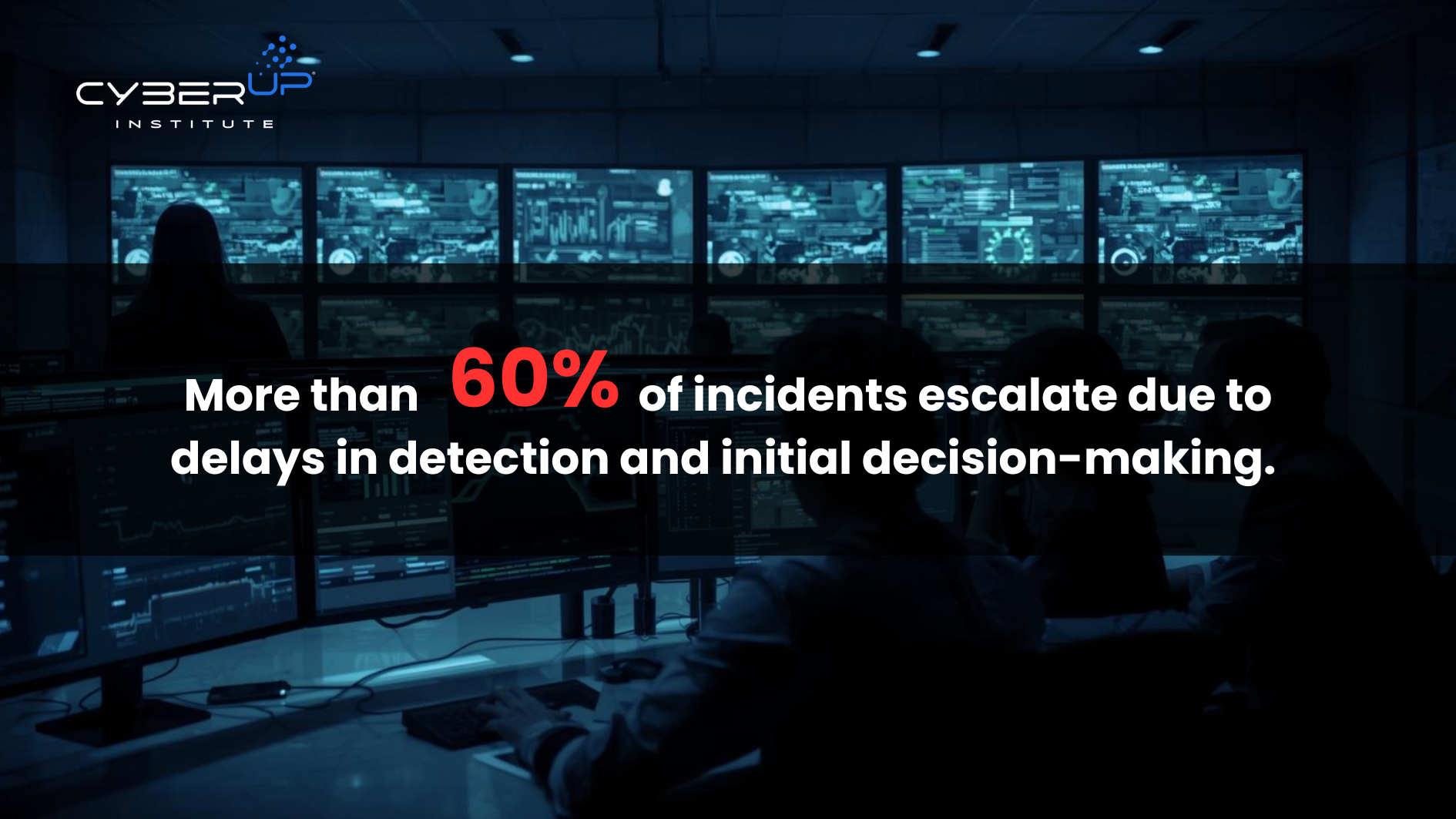
In CyberArena, participants experience the importance of deciding with incomplete information, relying on process, experience, and collaboration.
Second lesson: clear roles under pressure
During simulations, it quickly becomes evident how often roles are implicit rather than formalized. Who decides? Who communicates? Who executes?
CyberArena makes visible what usually remains hidden: without clear roles, even experienced teams enter conflict or stall. This is why incident response preparedness must address organizational aspects alongside technical ones, as outlined by NIST in its risk management and incident response models.
Third lesson: communication and coordination matter as much as technology
Many teams discover that the hardest part is not isolating a system, but coordinating actions. Communication degrades under stress: incomplete information, wrong channels, misaligned messages.
CyberArena forces teams to manage technical communication, management briefings, and stakeholder updates in parallel, demonstrating how directly communication affects response effectiveness.
From response to recovery: learning how to close the incident
Another key learning concerns post-incident handling. Teams often focus all energy on containment, neglecting recovery and verification.
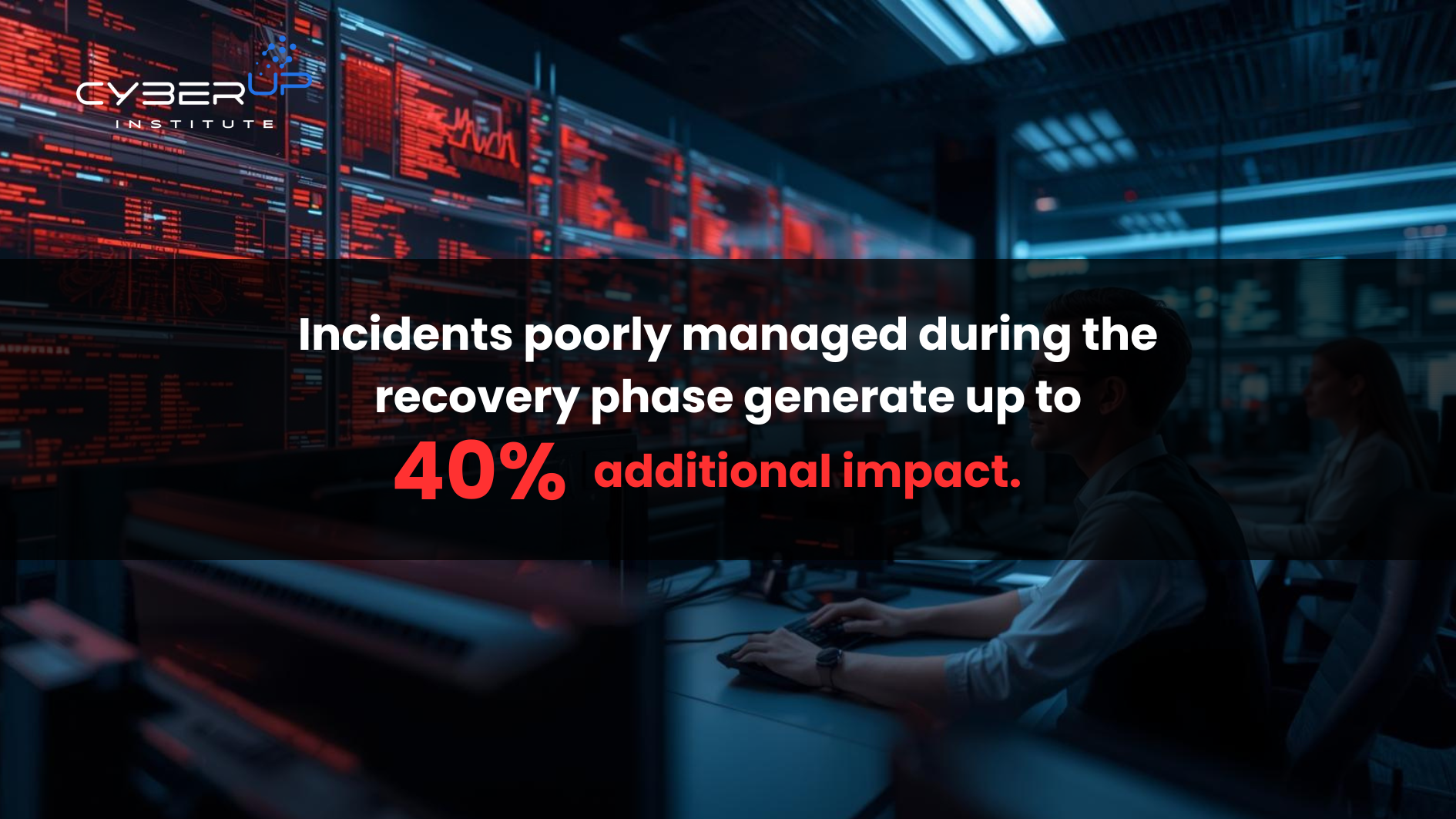
In CyberArena, recovery is treated as a structured phase: system validation, credential rotation, persistence checks, and controlled return to operations.
The real transformation: from technique to awareness
The distinctive element of the CyberArena experience is not the simulated attack itself, but the debriefing. This is where teams connect actions, decisions, and outcomes, transforming experience into lasting learning.
This transformation leads to broader awareness: security is not only about prevention, but about the ability to manage the unexpected. Teams leave the arena with a more realistic understanding of their strengths and improvement areas.
CyberArena as a tool for organizational resilience
CyberUP Institute uses CyberArena as a lever to build resilience at both team and management levels. Resilience does not come from the absence of incidents, but from the ability to face them without losing control, time, or trust.
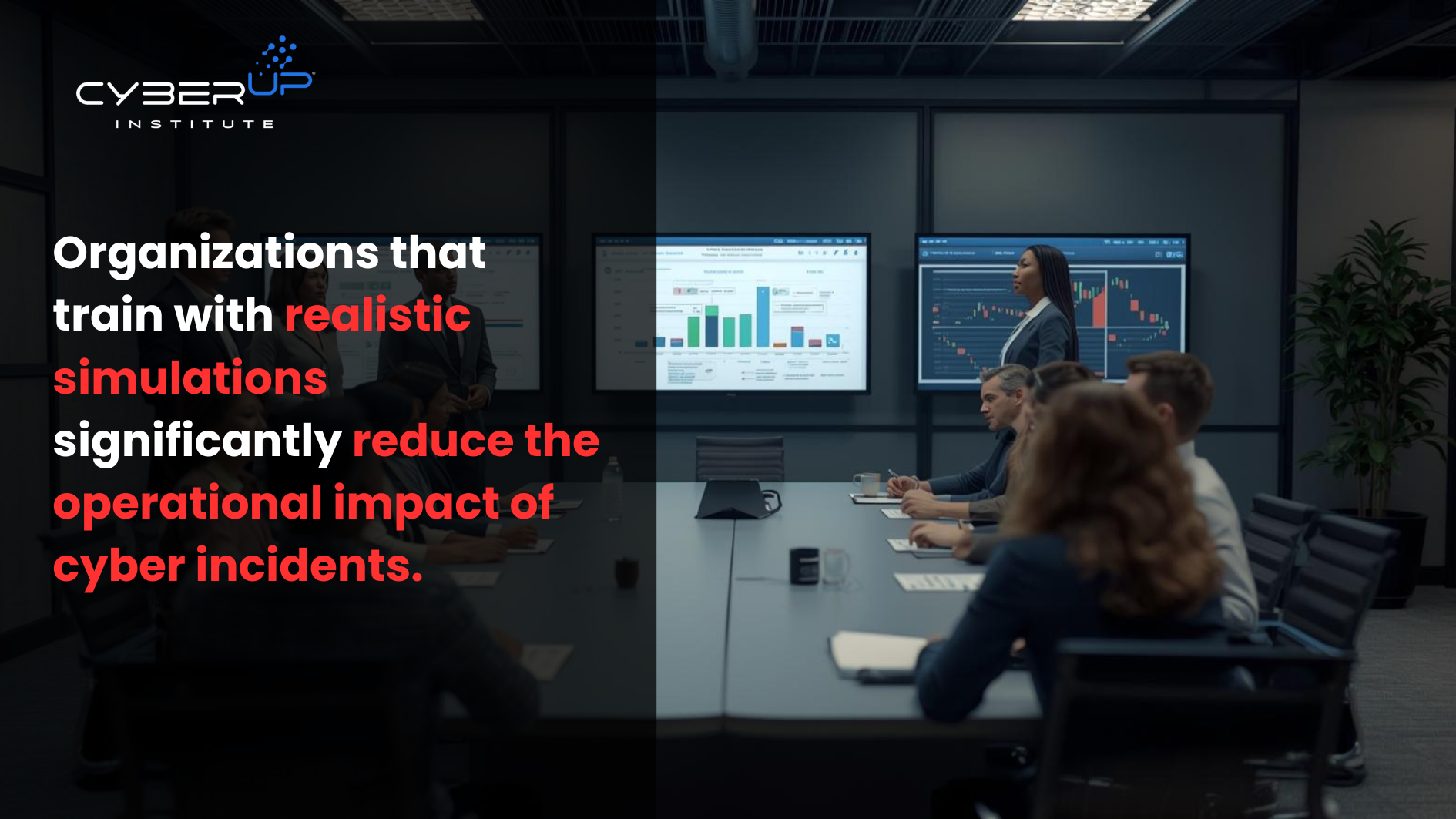
This approach is particularly effective in aligning IT, security, and leadership into a shared operational mindset.
Conclusion: becoming aware before it happens
From victim to aware is not a slogan, but a journey. Teams entering CyberArena learn that the difference is not the absence of attacks, but operational readiness.
CyberUP Institute believes that training decisions, roles, and communication in realistic scenarios is one of the most effective forms of cyber preparedness today. Because when a real incident occurs, there is no time to learn, only what has already been experienced matters.
Frequently Asked Questions (FAQ)
What is CyberArena and how is it different from traditional training?
CyberArena is an immersive simulation environment that reproduces realistic cyber incidents. Unlike traditional classroom training, it places participants under real decision-making pressure. Actions have visible consequences within the scenario. This turns theoretical knowledge into operational capability.
Who is CyberArena designed for?
CyberArena is designed for IT teams, security teams, SOC analysts, as well as management and non-technical functions involved in crisis decisions. Cyber incidents are not purely technical events. They involve people, processes, and communication. CyberArena trains the entire organization.
What do teams really learn during a CyberArena simulation?
Teams learn how to recognize early signals, make decisions with incomplete information, and coordinate under pressure. They identify organizational weaknesses that are often invisible in daily operations. Roles, communication, and priorities become clear. This type of learning rarely emerges from routine activities.
Is CyberArena useful even if an organization already has procedures and tools?
Yes, because procedures are effective only if they can be executed correctly under stress. CyberArena tests real operational readiness. It often reveals gaps that documents and policies do not show. It complements formal governance with practical experience.
What is the main benefit after completing a CyberArena experience?
Operational awareness. Teams leave with greater confidence in their ability to respond and a more realistic understanding of risk. This reduces reaction time and incident impact. Preparation becomes tangible and measurable.
Why is the debriefing phase so important?
Because it transforms experience into improvement. The debriefing connects decisions to outcomes in a structured, non-judgmental way. Lessons learned are consolidated and shared. This is what makes the training truly effective.